


In 2025, we launched our first species conservation project, Hornbill Guardians. This project focuses on protecting the critically endangered hornbills of Borneo, which are heavily poached for their distinctive beak-like crest. The crest, later used in handicrafts or traditional medicine, is worth a lot of money on the black market.
Hornbills are particularly vulnerable during the breeding season, when the female seals herself and her chicks inside a tree cavity while the male feeds them from the outside for weeks. During this time, it is easy for poachers to remove the female and her chicks from the cavity.
Hornbill Guardians
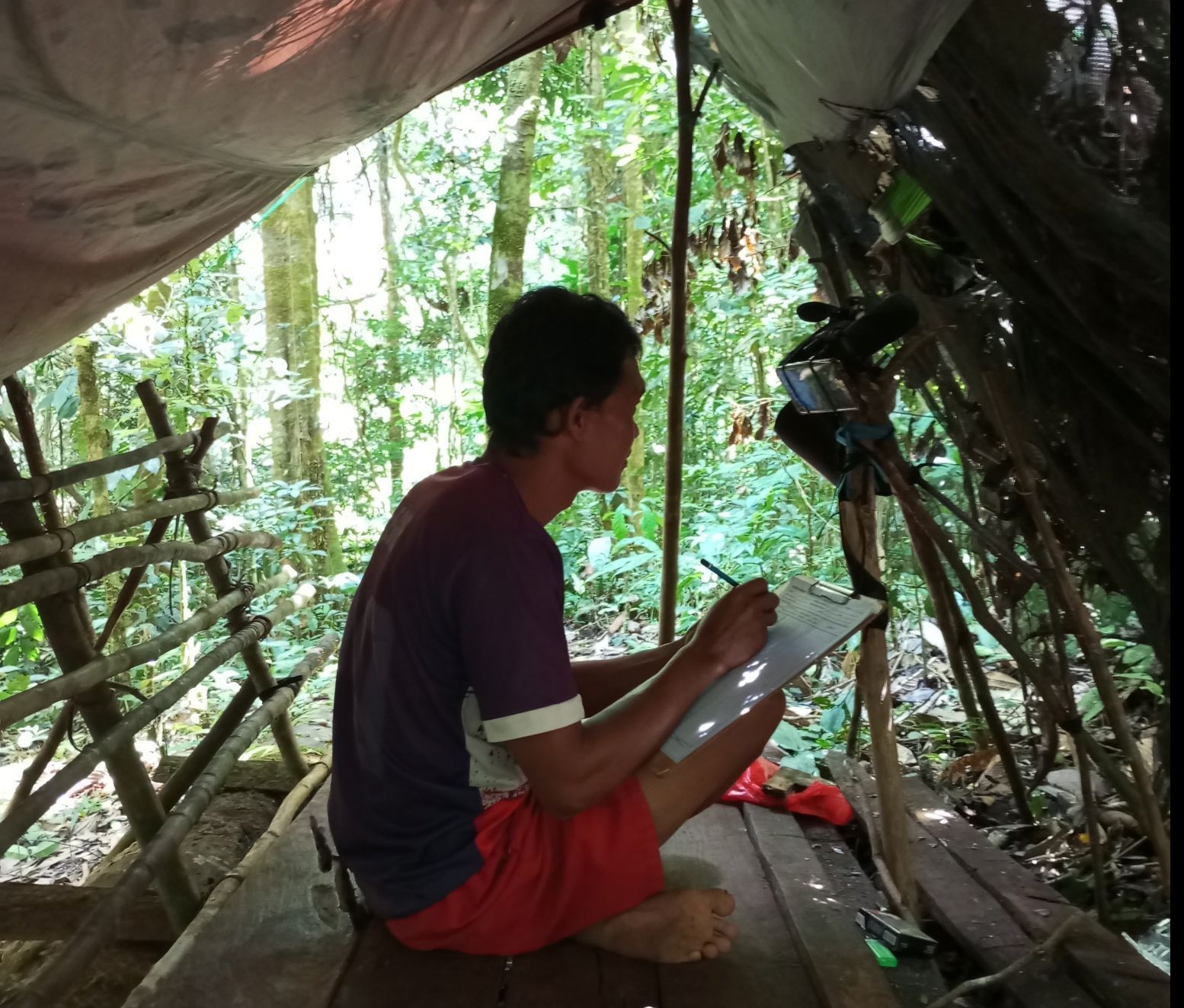
Protecting the birds is actually quite simple: during the sensitive breeding season, the nests must be reliably monitored. As someone is sitting attentively in front of the nest all day, it makes sense to use this time productively by collecting valuable data on the birds' behavior.
This is exactly how the 28 Hornbill Guardians, trained by our partner organization, work. They all come from the local Dayak communities surrounding the Gunung Naning and Gunung Nyut protected areas.
In 2025, the Hornbill Guardians monitored and protected a total of nine hornbill nests over several months. We are particularly pleased that these nests belonged to five different hornbill species, including the critically endangered shield-billed hornbill, as well as the furrowed hornbill, the long-crested hornbill, the rhinoceros hornbill, and the short-crested hornbill.
Results in numbers
- 6 fledglings successfully left the nest (4 in March and 2 in September 2025)
- 3 nests are still under observation
- Expansion of the program in 2025: 20 additional Hornbill Guardians were trained to expand the project further in 2026
Forest Patrols
But how are the nests even found in such remote areas? This is where the Forest Patrols come in, which our organisation has been supporting since 2020. They survey the forest, document illegal activities, and record the presence of various keystone species, including hornbill nests. Forest patrols mark the locations with their GPS devices, so that later, the trained Hornbill Guardians can protect these mapped nests.
In 2025, nearly 130 community members participated in these forest monitoring teams. In total, they contributed more than 5,000 hours of service, covering 4,000 kilometers of patrol trails, removing 602 wildlife traps, and reporting numerous illegal activities.
Rainforest Protection by Local Communities
The Forest Patrols and Hornbill Guardians are not only involved in preventing poaching and illegal use, but they also strengthen communities' sense of responsibility for their forests. Through training, joint evaluations, and clear agreements with authorities, local knowledge has been combined with modern conservation methods. The successes achieved so far demonstrate how effective community-based nature conservation can be.